

Bifacial panels have active cells on both sides, but this does not automatically mean double the production. The back side utilizes light reflected from the ground, so its impact depends on the location and method of installation.
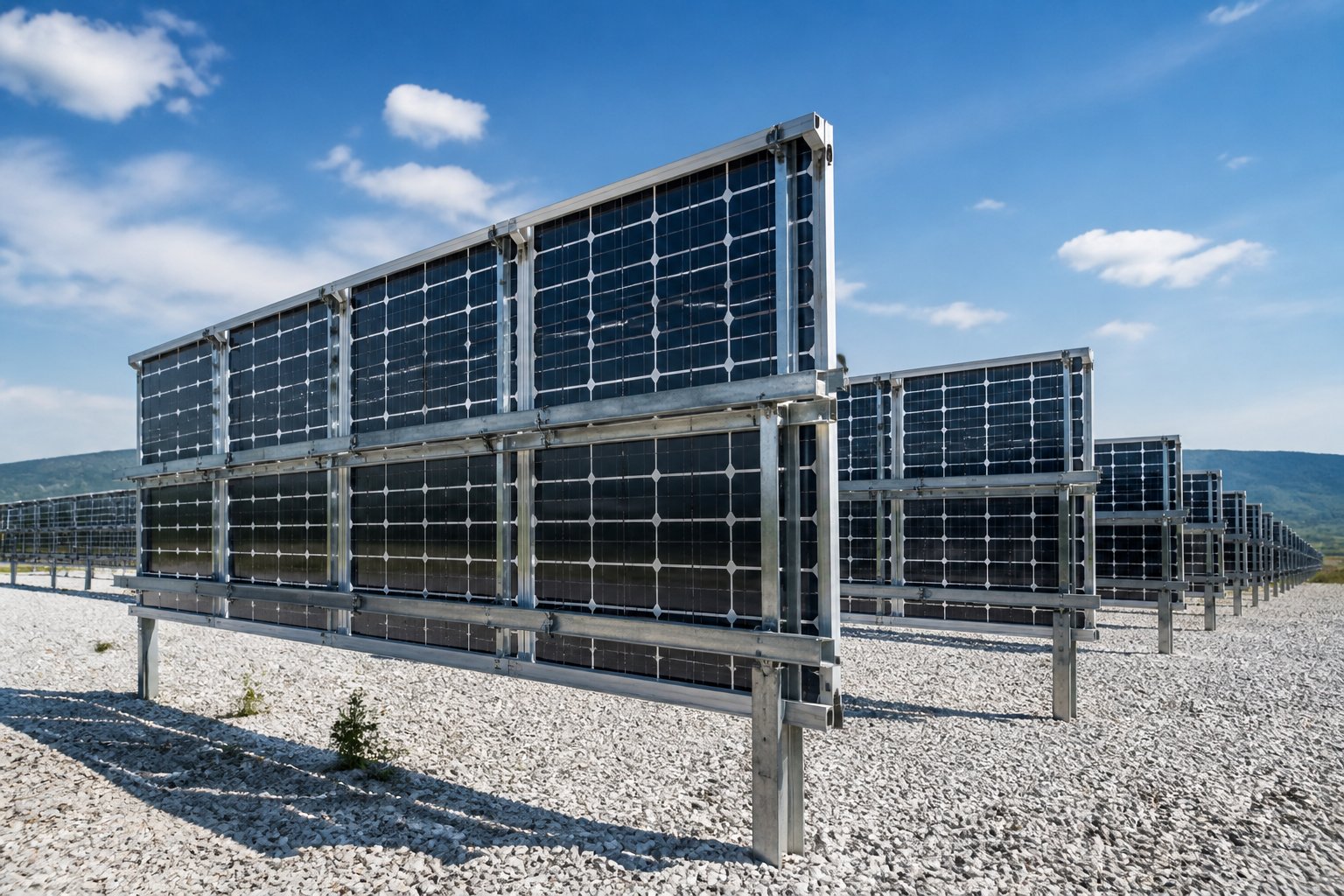
Yes, bifacial panels can produce energy from both sides, but the additional energy yield is usually several to a dozen percent, not 100%. You will learn about the importance of a bright surface, mounting height, spacing between modules, and light access to the rear side.
You will also find out when photovoltaics with bifacial modules make economic sense and when it is better to choose standard panels. You will learn about their construction, durability, and limitations affecting the profitability of the investment.
Key Information
- Bifacial panels utilize light falling on both the front and back sides.
- The actual additional yield largely depends on the ground and the mounting design.
- Ground-mounted installations and flat roofs with a bright surface usually provide the greatest profitability.
How Bifacial Modules Generate Electricity
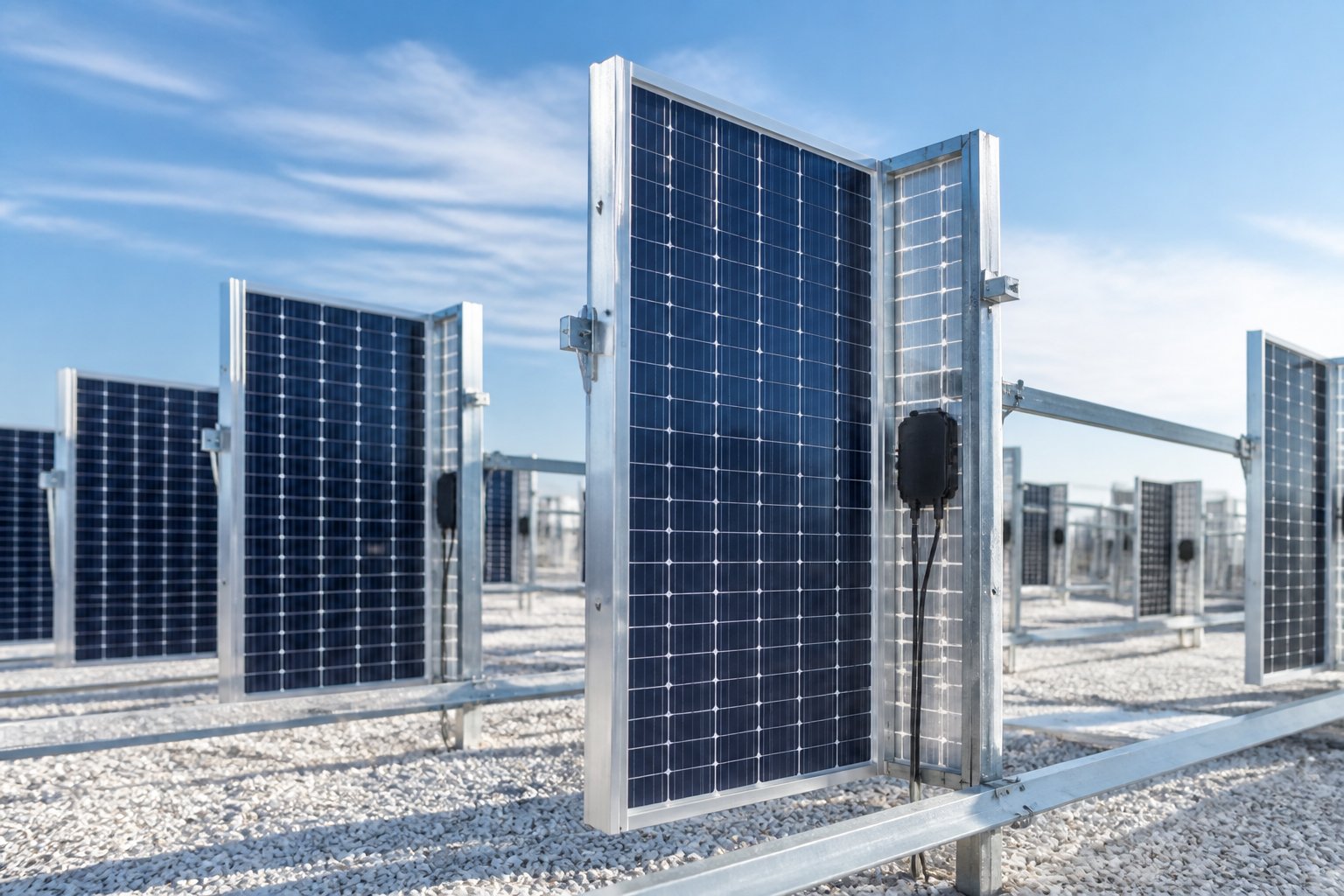
Bifacial photovoltaic panels utilize solar radiation reaching both the front and back sides of the cells. The yield is influenced by factors such as the amount of light, type of ground, mounting height, and the module's bifaciality factor.
Direct, Diffuse, and Reflected Radiation
The front side of a bifacial module primarily absorbs direct radiation, which is light falling directly onto the panel from the sun. It also utilizes diffuse radiation, which occurs when light passes through the atmosphere and clouds. This allows the panel to produce energy even on cloudy days.
The back side primarily benefits from reflected light. Solar radiation reflects off the roof, ground, snow, or other surfaces and strikes the rear part of the PV module. Bright surfaces, such as white gravel or snow, reflect more light than grass or dark felt roofing.
The amount of energy is also influenced by:
- the distance of the panel from the ground,
- the tilt angle,
- shading of the back side,
- the distance between rows,
- the cleanliness of the light-reflecting surface.
What is the Bifaciality Factor
The bifaciality factor indicates how much power the back side of a cell can generate compared to its front side under the same light intensity. For example, a value of 80% means that the back part of the cell can achieve 80% of the front side's power under identical test conditions.
However, this does not automatically mean an 80% increase in energy production. The back side usually receives less light because it utilizes reflected and diffuse radiation. The actual additional yield is often around 5–15%, and with high albedo, good mounting, and minimal shading, it can be higher.
When choosing modules, check the product data sheet. Compare the bifaciality factor, nominal power, warranty, and mounting method. A high value of this parameter alone will not guarantee large gains if the panel is placed low above a dark surface.
Bifacial Panels vs. Monofacial Modules
Monofacial modules, also called mono or single-sided panels, primarily generate electricity from the front side. Their back is usually protected by an opaque backsheet, so reflected light does not reach the active cells.
Bifacial panels have active cells on both sides and a transparent back layer. A glass-glass construction is most commonly used, which allows light to pass through from the back and can improve protection against moisture. However, such a module requires an appropriate support structure to avoid obstructing the back surface.
| Feature | Bifacial | Monofacial |
|---|---|---|
| Active sides | Front and back | Mainly front |
| Light reflection utilization | Yes | Negligible or none |
| Importance of ground | High | Lower |
| Mounting requirements | Higher | Standard |
The additional cost of bifacial modules makes sense primarily when you can ensure a bright ground, clear space behind the panel, and limited shading.
Ground Albedo and Actual Additional Yield
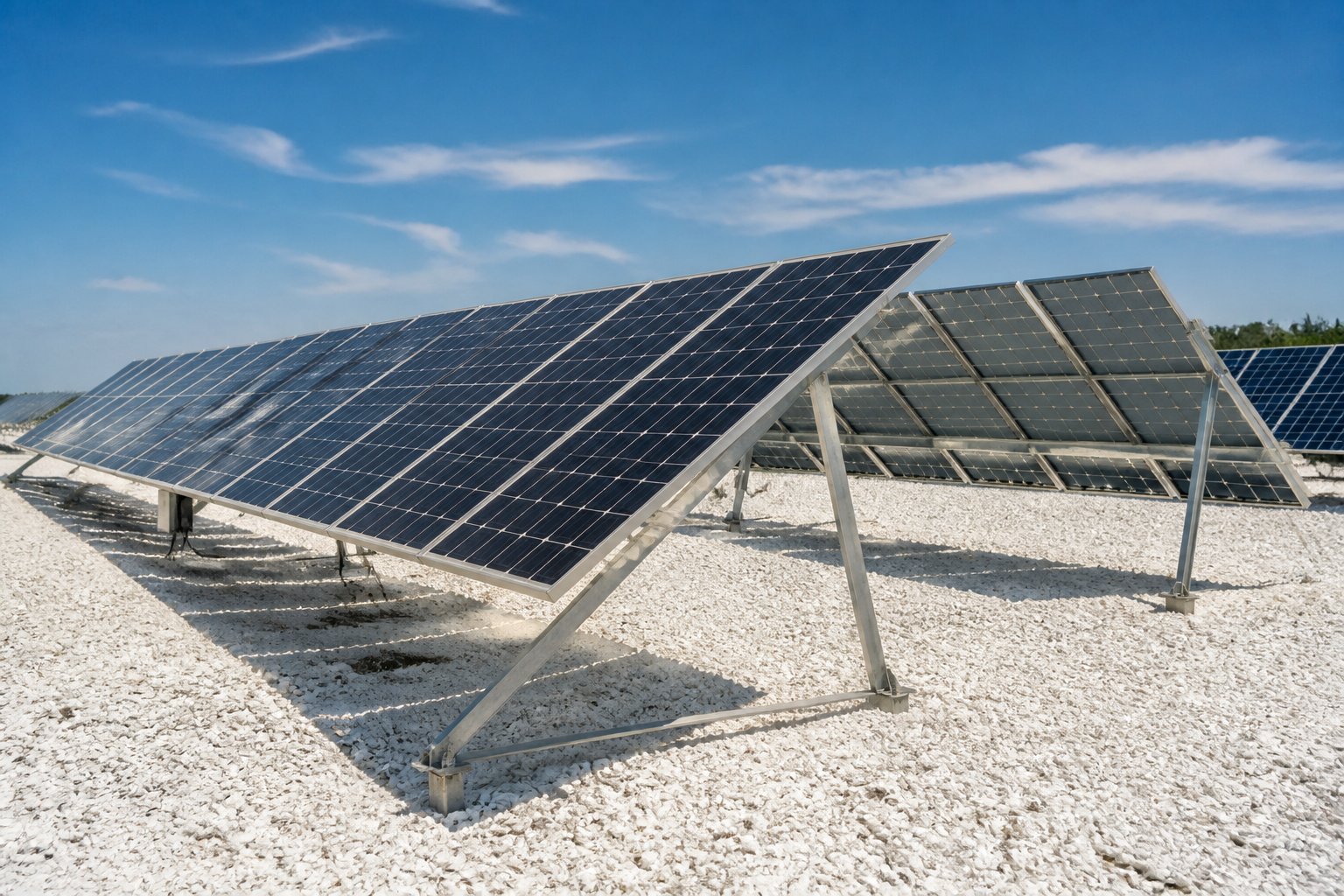
Ground albedo determines how much light a surface reflects towards the rear of a bifacial module. Bright ground, adequate clearance, and no shade can increase energy production, but the actual additional yield usually remains lower than values advertised.
How Reflectance Affects Production
The albedo coefficient ranges from 0 to 1. A surface with an albedo of 0.30 reflects about 30% of incident light and absorbs the rest. The higher the reflectance, the more radiation can reach the back side of the panel.
The additional yield is also influenced by:
- module height above the ground,
- panel tilt angle,
- spacing between rows,
- shading of the back part,
- module bifaciality factor.
If the back of the panel is a few centimeters above a dark roof tile, the albedo effect will be minimal. When the module is higher and there is a bright surface underneath, the back side receives more diffuse and reflected light.
In well-designed ground-mounted installations, the additional energy yield often ranges from a few to a dozen percent. This does not mean that the back of the panel provides as much energy as the front. The bifaciality factor, for example 80%, describes the ability of the back side to operate when illuminated, not an automatic 80% increase in total production.
Snow, White Gravel, and Bright Roof Membrane
Snow has a very high albedo, often ranging from about 0.60 to 0.90. If it accumulates around raised panels, it can strongly illuminate their back side. However, the gain occurs only if the snow does not cover the front surface and remains long enough to impact production.
White gravel and light gravel reflect more light than soil or dark aggregate. You can use them for ground-mounted installations, but the color of the ground alone is not enough. You also need adequate clearance and a row arrangement that minimizes mutual shading.
On a flat roof, a white roof membrane, such as PVC or TPO, provides favorable conditions. Its high reflectance can improve the performance of the rear side of the modules, especially with a structure that provides clearance. Before choosing panels, it is worth comparing the cost of bifacial with the predicted additional energy yield.
Grass, Sand, and Concrete – When the Effect is Smaller
Grass typically has an albedo of about 0.15–0.25. Its impact depends on its color, moisture, and height. Green, dense vegetation reflects a moderate amount of light, but shading by the panels can further alter conditions under the modules.
Sand reflects light differently. Light, dry sand can provide a moderate albedo effect, while wet or dark sand reflects significantly less. Concrete also does not always provide a large additional yield. A bright, clean surface reflects more light than dirty or dark concrete, but its impact is limited by the panel angle and mounting height.
On dark soil, grass, or a surface close to the panel's rear frame, additional energy production may be small. Obstacles, such as a fence, wall, or adjacent row, also limit light access to the rear side.
Module Construction: Glass-Glass, Cells, and Durability
When choosing a bifacial module, pay attention not only to its nominal power but also to its layers, cell type, and mounting method. Glass-glass construction, tempered glass, and PERC and HJT technologies affect energy yield, moisture resistance, and degradation rate.
Glass-Glass vs. Glass-Backsheet
A glass-glass module has tempered glass on both the front and back. The rear pane remains transparent, allowing cells to utilize light reflected from the ground. This construction is often used in bifacial modules, although the glass-glass construction itself does not guarantee bifacial operation. The cells must also have an active rear side.
In a glass-backsheet module, the front is protected by glass, and the back is replaced by an opaque backsheet made of plastic. Such a panel usually operates only from the front side, so it does not utilize light reflected from the roof or ground.
| Feature | Glass-Glass | Glass-Backsheet |
|---|---|---|
| Active rear side | Usually yes | Usually no |
| Moisture resistance | High | Depends on film quality |
| Module weight | Higher | Lower |
| Typical application | Bifacial, demanding conditions | Standard installations |
The Role of Tempered Glass, EVA, and Backsheet
Tempered glass protects cells from hail, snow, wind, and impacts during operation. In a glass-glass panel, the rear pane limits moisture penetration and helps maintain laminate stability. However, greater weight requires checking the roof's load-bearing capacity and the compatibility of the mounting structure with the manufacturer's instructions.
The EVA layer surrounds the cells and bonds them to the glass. It protects electrical connections from vibrations and partially from moisture. Its quality affects the risk of delamination and optical changes, such as yellowing.
In a backsheet module, the film protects the back from water, UV radiation, and mechanical damage. However, over time, it may age faster than glass, especially in high humidity and large temperature changes. A well-made laminate also limits the formation of microcracks but does not eliminate the risk from improper transport or installation.
PERC and HJT in Bifacial Technology
PERC cells have an additional layer on the back that improves light utilization and reduces electrical losses. In the bifacial version, their rear surface can react to reflected light, but the yield depends on the cell design, spacing between cells, and the amount of light reaching from below.
HJT technology combines crystalline silicon with thin layers of amorphous silicon. HJT cells are naturally well-suited for bifacial operation and usually maintain efficiency at higher temperatures. They also often have a low temperature coefficient, which can increase production on hot days.
However, the actual result is also influenced by: the module height above the ground, surface color, spacing between rows, and shading of the rear side. Therefore, before purchasing, check the product data sheet for bifaciality, i.e., the ratio of the rear side's efficiency to the front side's, and the measurement conditions for the stated yield.