

N-type technology is rapidly gaining importance in the renewable energy market. It offers high efficiency, better performance in low sunlight, and less degradation than older P-type solutions like PERC.
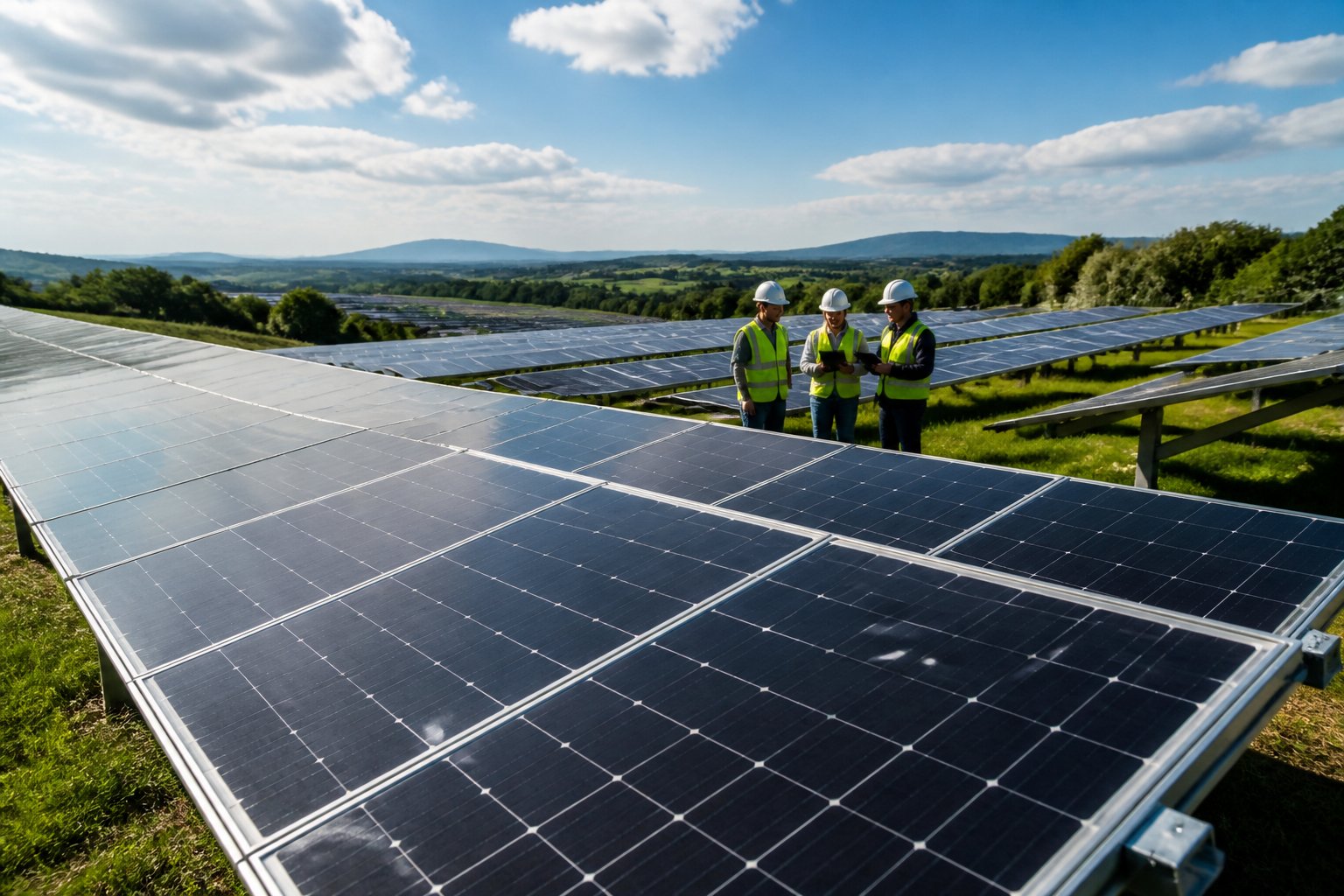
If you are planning a new installation, N-type modules can provide greater energy production throughout their lifetime, although their cost-effectiveness also depends on price, installation conditions, and quality of workmanship. Check out the differences between TOPCon, HJT, and PERC technologies and what to consider when choosing photovoltaic panels.
Key Information
- N-type cells offer high efficiency and less degradation.
- TOPCon and HJT can increase energy yield in appropriate conditions.
- Profitability depends on module price, installation site, and installation quality.
What Makes N-Type Cells Stand Out?
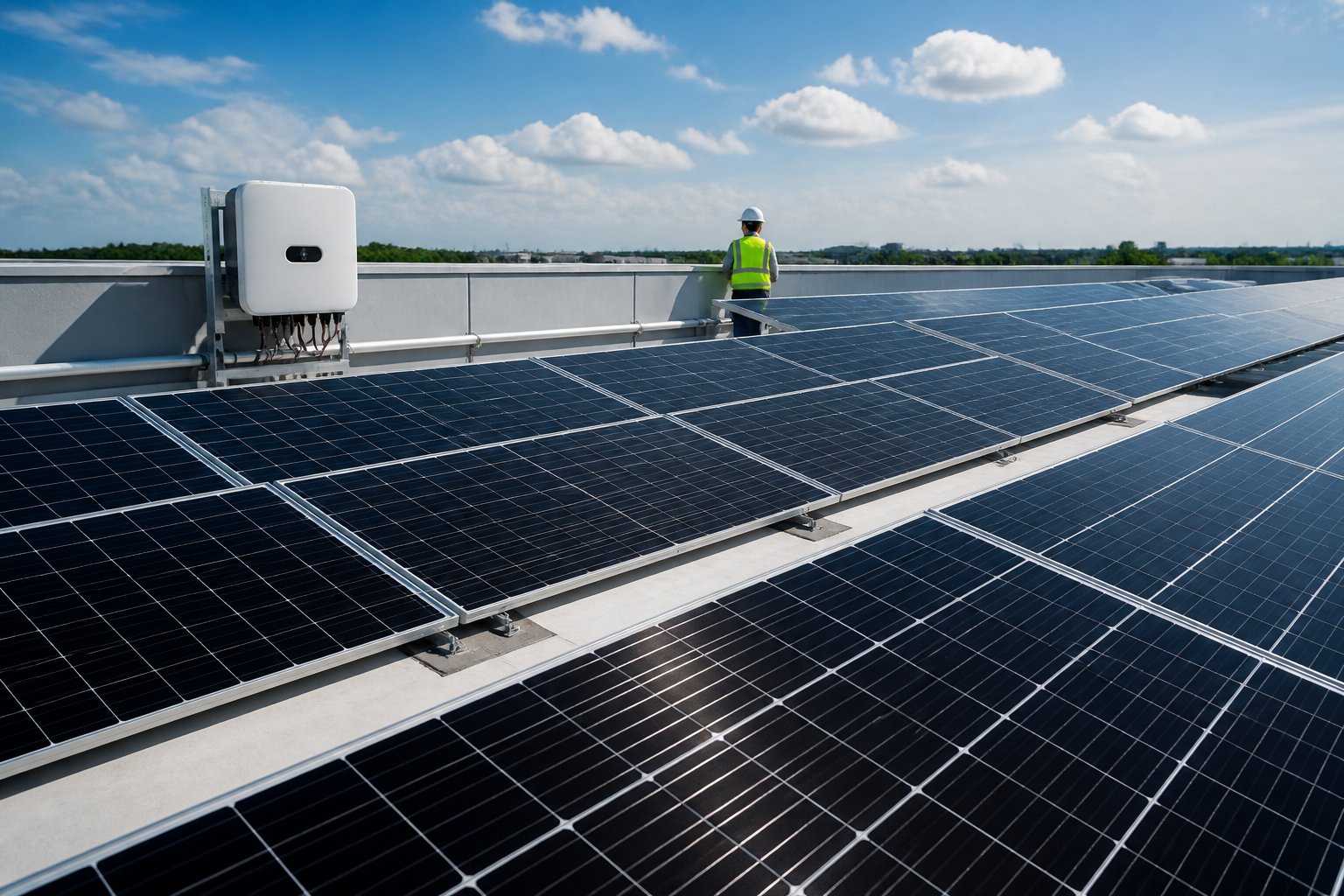
N-type cells use n-type silicon and most often phosphorus dopants. Such a structure limits some electrical losses and reduces susceptibility to degradation, which is why n-type panels can provide higher efficiency and more stable operation than many older p-type modules.
N-Type Silicon, Phosphorus, and the Semiconductor Junction
N-type silicon is created by adding phosphorus dopants to silicon. Phosphorus provides additional electrons, which increase the material's conductivity. In a photovoltaic cell, n-type silicon combines with a p-type layer, forming a semiconductor junction. It is here that the energy of sunlight is converted into electrical current.
In classic designs, manufacturers often used p-type silicon doped with boron. Boron can promote the formation of oxygen-related defects, leading to light-induced degradation, known as LID. N-type cells are much less susceptible to this problem.
For you, this means less power loss in the first years of operation. N-type modules often also use modern solutions, such as TOPCon or heterojunction, which reduce charge carrier recombination and increase cell efficiency.
Difference Between N-type and P-type Cells
The most important difference concerns the type of base material and the dopant used:
| Feature | N-type cells | P-type cells |
|---|---|---|
| Base material | N-type silicon | P-type silicon |
| Typical dopant | Phosphorus | Boron |
| Susceptibility to LID | Low | Higher |
| Efficiency | Usually higher | Depends on technology |
| Cost | Often higher | Usually lower |
P-type cells can still perform well, especially in installations with a limited budget. P-type modules are also widely available and proven in many existing systems.
N-type panels usually perform better when you have a small roof area, high energy consumption, or expect long-term operation of the installation. Their higher initial price may result from more advanced production, but greater power from the same area and slower degradation can improve energy yield over the entire period of use.
Why Does N-Type Provide Higher Energy Yields?
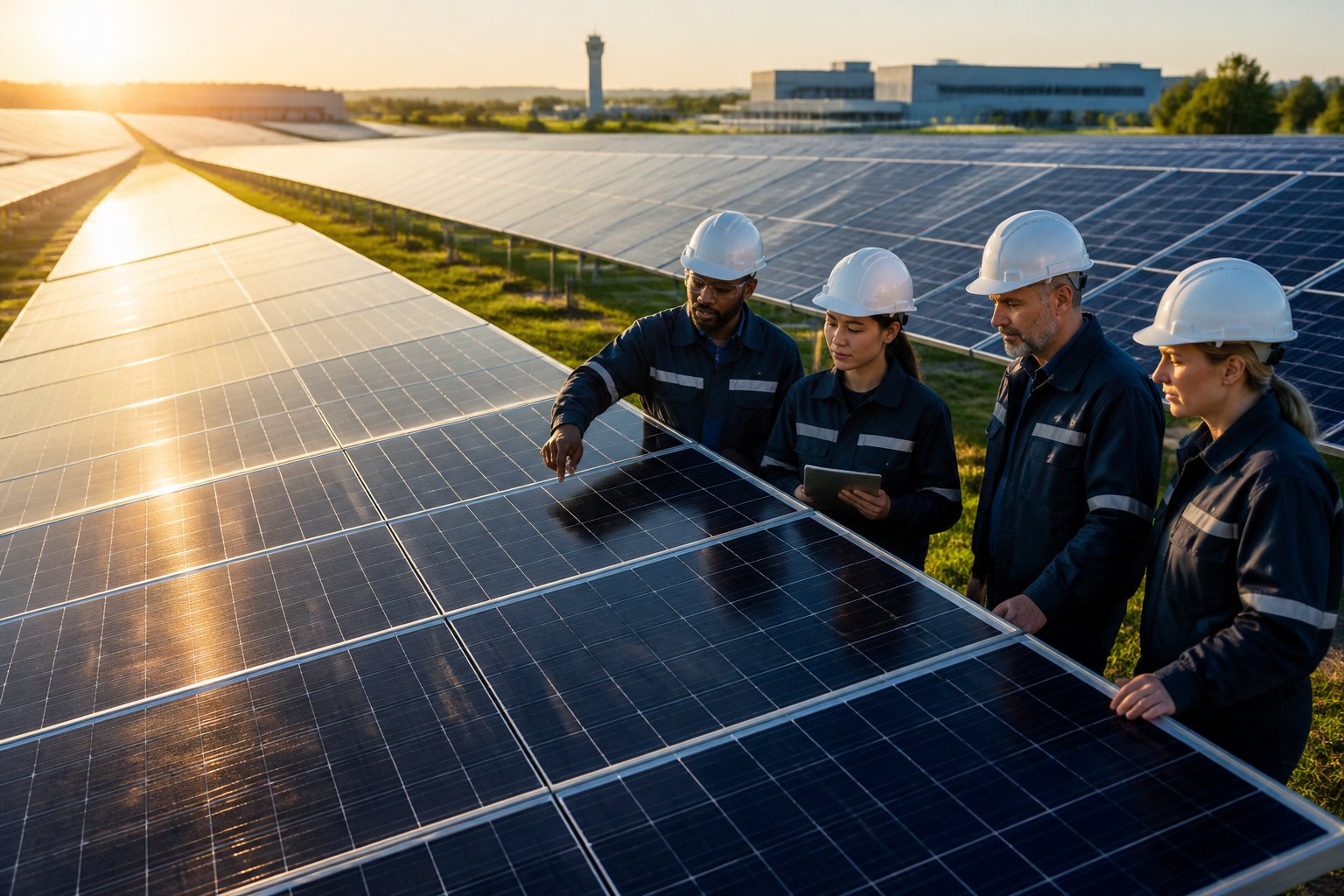
N-type technology combines high cell efficiency, lower losses during high-temperature operation, and the ability to utilize radiation incident on the module's rear side. This allows you to get more energy from the same area, especially with limited roof space.
Conversion Efficiency and Production from Limited Area
N-type cells more effectively convert solar radiation into electrical energy. In practice, modern N-type modules, especially with TOPCon technology, often achieve efficiencies exceeding 23%. Higher conversion efficiency means more power from a single module of similar dimensions.
This is important when you have a small roof area or need to avoid chimneys, windows, and shaded sections. With the same number of panels, you can achieve greater installation power, and with the same power, you need fewer modules.
N-type cells also show lower susceptibility to light-induced degradation, known as LID. Their power usually decreases more slowly in the first years of operation, which helps maintain stable energy yields for a longer time.
Temperature Coefficient and Summer Operation
Every module loses some power when its temperature rises. The temperature coefficient is then important – the lower it is, the smaller the drop in efficiency when the panel heats up.
In summer, the module surface temperature can significantly exceed the air temperature. N-type modules, especially TOPCon, usually maintain higher power in such conditions than older P-type modules. The difference does not eliminate thermal losses, but it can increase daily yield during hot days.
Check this parameter in the product data sheet. Manufacturers usually state it as a percentage decrease in power per degree Celsius above the test temperature of 25°C. Compare modules of similar power, as the technology name alone does not define the entire panel characteristic.
Bifaciality and Utilization of Reflected Light
Many N-type modules use a bifacial design. This means that the front side receives direct solar radiation, while the back side can process light reflected from the ground.
Additional production depends on several conditions: surface brightness, panel height, tilt angle, distance from the roof, and lack of obstruction of the module's rear part. A light roof membrane, concrete, or snow reflect more light than dark roofing felt or soil.
On a flat roof, a design with clearance under the modules can better utilize bifaciality than panels placed directly on the covering. Before choosing, check whether the manufacturer provides power for the rear side as well and what conditions were assumed during measurements.
Module Durability and Degradation Over 30 Years
When choosing N-type modules, you focus on lower initial degradation, less susceptibility to some material defects, and longer power warranties. The durability of the installation is also determined by the quality of lamination, moisture resistance, operating temperature, and installation conditions.
Light Induced Degradation and Boron-Oxygen Defects
Light Induced Degradation (LID) refers to the power drop after the module begins operation. In p-type cells, made of silicon doped with boron, light can activate boron-oxygen defects. In the initial period of operation, these cause a permanent reduction in cell parameters.
N-type cells use n-type silicon and usually do not contain boron in the same role. Therefore, they are much less susceptible to classic LID. This does not mean a complete absence of degradation. N-type modules may be subject to other phenomena, such as light and elevated temperature-induced degradation (LeTID), depending on the cell design and production process.
When comparing offers, check the declared annual power degradation, not just the technology name. It is also worth verifying test results and certifications, such as IEC 61215. The standard confirms the completion of specific durability tests, but does not guarantee identical performance in every location.
Power Degradation and Warranty Conditions
Manufacturers usually provide a product warranty and a separate power warranty. For modern N-type modules, you will often find a warranty of maintaining approximately 87–90% of power after 30 years, but the exact value depends on the model. For older p-type modules, approximately 80–85% after 25 years is more common.
Do not treat these values as a forecast of the entire installation's production. Yield is also affected by soiling, shading, inverter failures, temperature, and connection degradation. The power warranty specifies the minimum level according to the manufacturer's conditions, and the complaint procedure may require measurements performed by an authorized service.
Before purchasing, compare:
- initial power degradation,
- linear power degradation in subsequent years,
- product warranty duration,
- scope of tests and certificates,
- conditions for accepting a claim.
Reports from independent bodies, such as TÜV Rheinland or Kiwa, can help assess the credibility of declarations, but always check exactly what a given certificate covers.
Resistance to Metallic Contaminants
Metallic contaminants in silicon can create recombination centers. These limit the flow of charge carriers and reduce cell efficiency. The problem can arise during wafer production, cell cutting, soldering, or contact with metallic elements.
N-type silicon shows good tolerance to some contaminants, especially iron, which is why N-type cells can maintain more stable parameters. However, this does not mean complete resistance. Wafer quality, process purity, electrical contacts, and moisture protection still play a significant role.
When choosing a module, check if the manufacturer provides information about wafer quality control, contact technology, and reliability tests. The IEC 61215 standard includes, among others, tests for mechanical loads, damp heat, and temperature cycles. Additional reports from TÜV Rheinland or Kiwa can confirm the resistance of a specific model, but they do not replace an analysis of operating conditions on your roof.
TOPCon, PERC, and HJT — Which Cell Technology Makes Sense?
The choice of technology influences efficiency, degradation rate, high-temperature performance, and installation cost. For most new projects, N-type panels with TOPCon cells are a good starting point, while HJT should be considered for larger budgets or limited roof space.
How Tunnel Oxide Passivated Contact Works
TOPCon technology, or Tunnel Oxide Passivated Contact, uses a very thin layer of silicon oxide SiO₂ and a layer of doped silicon. This design reduces energy losses on the cell surface and facilitates the flow of charges to metal contacts.
TOPCon modules are usually based on N-type silicon wafers. Compared to P-type wafers, they are less susceptible to light-induced degradation, known as LID. This allows the panel to maintain high nominal power for longer.
TOPCon also performs well in high temperatures and weak sunlight. When choosing, check the module efficiency, temperature coefficient, degradation warranty, and power per square meter. The technology name itself does not replace the analysis of specific parameters.
TOPCon Modules vs. PERC Modules
PERC is an older and well-proven design, mostly based on P-type silicon. An additional passivation layer on the back of the cell increases the yield, but this technology usually achieves lower efficiency and greater degradation than modern N-type panels.
| Feature | TOPCon Modules | PERC Modules |
|---|---|---|
| Wafer type | Mostly N-type | Mostly P-type |
| Efficiency | Usually higher | Usually lower |
| Initial degradation | Low | Higher |
| Price | Often slightly higher | Often lower |
| Application | New installations, small roof | Projects emphasizing price |
If you have limited roof space, TOPCon will allow you to get more power from the same number of modules. PERC may make sense with a very tight budget, but the price difference should be compared with the expected yield and operating life.
When to Consider HJT Modules
HJT modules, or heterojunction cells, combine crystalline silicon with thin layers of amorphous silicon. This structure effectively limits losses on the cell surface and ensures low power degradation during hot weather.
HJT can be a good choice if you have a small roof area, high operating temperatures, or care about low degradation over the long term. This technology often also offers good yield with diffused light, although the actual result depends on the specific module and installation conditions.
You will usually pay more for HJT than for PERC, and sometimes more than for TOPCon. Therefore, check not only the efficiency, but also the temperature coefficient, manufacturer's warranty, module weight, installation method, and service availability.
Installation Cost and Real Profitability of N-Type Choice
A higher price for N-type modules does not always mean a higher overall investment cost. Profitability is also determined by energy yield, power degradation, installation conditions, energy price, and the method of settling surpluses.
Module Price vs. Total System Cost
N-type modules often cost more than comparable P-type panels, but the difference in the total installation price may be smaller. The panel is only a part of the expense. You also pay for the inverter, structure, safety features, cables, installation, and system commissioning.
| Element | Impact on cost |
|---|---|
| Photovoltaic modules | high |
| Inverter and safety features | medium |
| Structure and installation | medium |
| Energy storage | very high |
N-type technology can make sense when you have a small roof area. Higher efficiency allows for greater power from the same number of modules. Before purchasing, compare offers based on the total system price, not just the price of one panel.
Also check the warranty conditions. Important are the guaranteed initial power, linear power degradation, and the scope of the product warranty. Some N-type modules maintain higher power after many years of operation, but actual parameters also depend on installation and panel ventilation.
LCOE, Energy Production, and Return on Investment
LCOE, or Levelized Cost of Energy, shows the cost of producing 1 kWh over the entire operating period of the installation. In its assessment, consider the system price, energy production, service, inverter replacement, and module power degradation.
N-type modules can increase energy yield due to lower degradation and better performance in high temperatures or weak light. However, this does not mean a constant advantage on every roof. Shading, roof orientation, tilt angle, and installation quality often have a greater impact than the cell technology itself.
To assess the return on investment, compare:
- annual energy yield in kWh,
- the portion of energy consumed directly,
- revenue from surpluses in the net-billing system,
- purchase and installation cost,
- predicted power degradation.
Higher self-consumption usually improves the financial result. A heat pump, air conditioning, car charger, or energy storage can increase the use of self-generated power. However, do not assume constant energy prices or identical yields every year.
When P-Type Panels Can Still Be Justified
P-type panels can still be a reasonable choice when they offer a significantly lower price with similar power and good warranty conditions. This is especially important on a large, unshaded roof where you can easily install the appropriate number of modules.
P-type may suit installations with a limited budget, especially when the difference in yield does not cover the additional cost of N-type within the assumed operating period. In such cases, compare the predicted energy production, guaranteed power degradation, and high-temperature performance parameters.
Do not choose cheaper panels solely based on the catalog price. Evaluate the manufacturer, warranty conditions, service availability, and module compatibility with the inverter. If the roof has limited space, there is partial shading, or you plan for long-term operation, N-type can provide better utilization of available space.
How to Choose N-Type Modules for a New Installation?
When choosing N-type modules, compare not only power but also high-temperature yield, degradation rate, warranty conditions, and build quality. Also check panel dimensions, appearance, and compatibility with the structure and inverter.
Catalog Sheet Parameters Worth Comparing
Start with nominal power and module efficiency. Higher efficiency helps to fit more power on a small roof area, but it should not be the only criterion. Also check the power temperature coefficient. The lower its absolute value, the smaller the losses during heat waves.
Important parameters include:
- degradation in the first year and in subsequent years,
- power tolerance, preferably equal to or positive,
- operating current and voltage,
- snow and wind load,
- shading resistance, if the roof does not have ideal exposure,
- dimensions, weight, and number of bypass diodes.
N-type technology can limit losses related to LID degradation, but specific results depend on the cell design. Compare the catalog sheets of Jinko Solar, Trina Solar, JA Solar, LONGi, Jolywood, and DAS Solar modules, using the same parameters and similar test conditions.
Warranties, Certificates, and Manufacturer Credibility
Check the product warranty and the performance warranty separately. The first covers material and manufacturing defects, while the second specifies the minimum power output after subsequent years of operation. Pay attention to whether the warranty is honoured by the manufacturer, its European branch, or the seller.
The documentation should confirm compliance with the IEC 61215 standard, which covers module construction and durability tests. Certificates and reports issued by independent bodies, such as TÜV Rheinland or Kiwa, are also useful. However, the certificate mark alone does not replace the full product data sheet and warranty conditions.
Before purchasing, check if the manufacturer has been on the market for many years, provides access to spare parts, and publishes up-to-date technical documents. Jinko, Trina Solar, JA Solar, and LONGi have extensive sales networks, but smaller manufacturers, such as Jolywood or DAS Solar, also require an assessment of the specific distributor and service conditions.
Selecting the Construction and Aesthetics of Panels
Match the modules to the roof dimensions, rafter spacing, and structural load-bearing capacity. Large panels can reduce the number of mounting elements, but they can be more difficult to lift and set up on small roof areas. Also, check the position of the clamps, the mounting range, and compatibility with the mounting system.
For a roof with a complex shape, choose modules that will make good use of the available surface. On shaded areas, compare the bypass diode arrangement and consider optimisers if the designer deems them necessary.
Appearance also matters. Full black has black cells, frame, and usually black laminate, while black frame combines dark cells with a black frame and a lighter background. Choose a solution that matches the roof colour and local aesthetic requirements.